CHANEY LAW FIRM BLOG

Subscribe to our Blog

Eating crow on the 2014 ethics amendment

When early voting started last year, I posted a guide on the 5 constitutional amendments that were on the ballot. With a year to reflect on how the changes worked out in practice, I can't put into words how disappointed I am in the result on the ethics amendment. Here was my assessment last year:

Proposed Amendment No. 3 is really several issues in one. It contains much needed campaign finance reform, like prohibiting gifts from lobbyists and restricting legislators from becoming lobbyists for two years after elected service. It creates an independent commission to set salaries of elected constitutional officers (e.g., governor, legislators, secretary of state, judges, etc.). Finally, it extends term limits for the legislature. This amendment was a compromise between several different factions in the legislature. I voted yes because I think campaign finance reform was needed, and after speaking with legislators on both sides of the aisle, I think having legislators with additional institutional knowledge may be beneficial to the Legislature as a whole.

What wound up happening? The Arkansas Times ran periodic updates on how the prohibition on gifts from lobbyists was roundly ignored. Even officials who get caught turning in false ethics reports now have a 30-day window to file amended reports without punishment. There's no teeth to the ethics laws anymore. Anyone getting caught gets to say, "no harm, no foul."

The "independent commission" gave state officials huge pay raises — except for public defenders, who make (at best) about 60% of what prosecutors make. This exacerbates an already problematic access to justice issue in the state.

It's probably too early to say one way or the other what the long-term effects of the term limit extension will be. The pay raises given to legislators, however, mean that any individual legislator stands to earn far more during his or her time in office than before. Historically, Arkansas' legislature was inhabited by ordinary citizens — lawyers, doctors, farmers, etc. — not professional politicians. In my opinion, the result of the amendment is an ill-advised move towards a class of professional politicians.

I'd be lying if I said I wasn't disillusioned by the abuses of the ethics amendment.

More likely than not, movies and TV mislead about the burden of proof in civil cases

Most people have seen courtroom dramas. Attorneys yell at each other. The judge cautions the attorneys. The witness fires back at the cross-examining attorney. Passionate arguments are made to the jury during closing arguments. The suspense builds as the jury renders its verdict.

Perhaps the most popular courtroom dramas on television are Law and Order and Crime Scene Investigation. But are these television shows and other movies an accurate depiction of what happens in real life? As with almost any question to an attorney, the answer to this question is “it depends.”

The most fundamental part of the answer is whether the case is a criminal or civil one. This is due to the different standards that apply in these types of cases. Because jurors are entitled to consider the evidence in light of their own observations and experiences in the affairs of life, which includes learning the law from television shows and movies, confusion frequently arises about which standard applies in civil cases.

If you have seen any courtroom TV drama, you may know that in a criminal case, the state must prove the defendant is guilty of a crime beyond a reasonable doubt. However, civil cases are different. The plaintiff in a civil case must prove his or her case by what is known as “the preponderance of the evidence.” Every jury hearing a civil case in Arkansas will hear the following instruction from the trial judge:

A party who has the burden of proof on a proposition must establish it by a preponderance of the evidence, unless the proposition is so established by other proof in the case. “Preponderance of the evidence” means the greater weight of evidence. The greater weight of evidence is not necessarily established by the greater number of witnesses testifying to any fact or state of facts. It is the evidence which, when weighed with that opposed to it, has more convincing force and is more probably true and accurate. If, upon any issue in the case, the evidence appears to be equally balanced, or if you cannot say upon which side it weighs heavier, you must resolve that question against the party who has the burden of proving it.

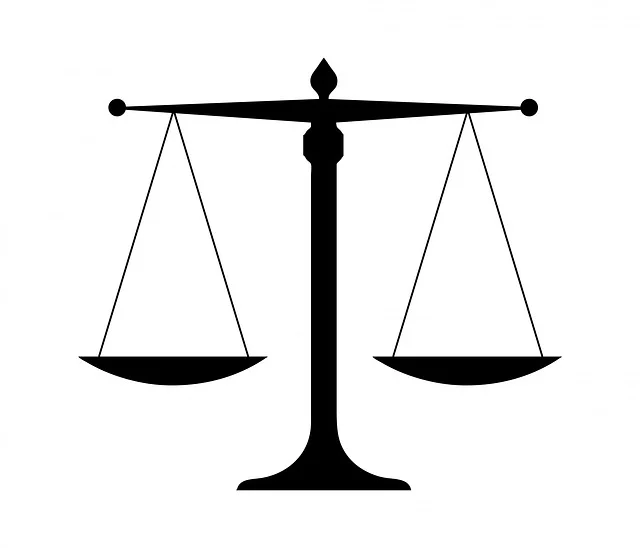
In other words, the plaintiff must prove his or her version of the facts is more probably true and accurate than the defense’s version of events. Stated another way, the jury must have a 51% confidence factor to rule for the plaintiff. Perhaps the best analogy of this principle are the scales of justice seen at right:

If a plaintiff (represented by the scale on the left) tips the scale slightly more than the defendant (represented by the scale on the right), then the jury should find in favor of the plaintiff. However, if the scales are even, or if the scales tip slightly in favor of the defendant, then the jury should find in favor of the defendant.

Most courtroom dramas I have seen involve criminal cases. “The Judge” came out in 2014 starring Robert Duvall and Robert Downey, Jr., which provided a good example of the application of the beyond a reasonable doubt standard of proof in criminal cases. “Twelve Angry Men” stars Henry Fonda, and is an interesting perspective from the inside of a jury’s deliberation. “And Justice For All” starred Al Pacino at his finest, whereby he is forced into a dilemma of defending a judge guilty of a crime, and at the same time defending other innocent clients. Any John Grisham book made into a movie is a good choice. One of the few movies regarding civil cases is “The Rainmaker,” starring Matt Damon as a young attorney representing a plaintiff’s family in a bad faith case against an insurance company. Another movie providing an example of a civil case is called “A Civil Action,” starring John Travolta, who represents several families affected by contaminated groundwater in Woburn, Massachusetts.

So are these movies an accurate portrayal of a real life courtroom? You’ll have to watch to find out.  


Benefits and consequences of provisional patent applications

Many times when clients come to me for assistance, they've either seen or actually used an online invention help company. From my perspective, all these guys ever seem to do is file provisional patent applications. I rarely see the quality of work I'd expect from a  practicing patent lawyer from these online outfits. This is why the USPTO has a "Scam Prevention" page targeted towards invention promotion firms.

Given the bad rap for provisional applications, some patent attorneys flatly refuse to file them. In my experience, however, a provisional application can be a useful tool. This is especially so when the inventor hasn't developed a full plan for how the product will be made on a production scale. Here are the things I explain to my clients about the provisional process:

Provisional Patent Application Option: If your inventive concept is not yet complete, or information turned up in the patent search requires you to design around prior art, you may elect to file a provisional patent application. This application is not examined on the merits by the PTO. Rather, it establishes an early filing date for your inventive concept. The provisional patent application is good for one year, after which you must either file a regular utility patent application or abandon the invention.

Benefits of a Provisional Patent Application: The provisional application gives you a year in which to develop your inventive concept into a marketable or near marketable form. If your invention is already marketable, a provisional application gives you the option to explore market viability for a year before filing a regular utility application. Some of the requirements of a utility application are not present for provisional applications, so provisional applications are somewhat less expensive than utility applications. 

Consequences of a Provisional Patent Application: New inventive concepts developed in the one-year interim period after filing a provisional application many not receive the benefit of the provisional application’s filing date. For this reason, the provisional application needs to be as detailed as possible when filed. A utility application will require significant additional work beyond that performed for a provisional application. The provisional application may also delay the examination of a utility patent application.

In my view, the inventor must weigh the pros and cons of a provisional patent before electing to pursue one. A client must always give informed consent for attorney decisions, and filing a provisional application for every client takes that choice away from the client. This is why invention promotion firms are wrong to use a cookie cutter approach. Likewise, attorneys that refuse to provisionals for any client may also be doing their clients a disservice.

What do you think are the correct circumstances for using a provisional application?