CHANEY LAW FIRM BLOG

Subscribe to our Blog

Nathan secures pontoon patent

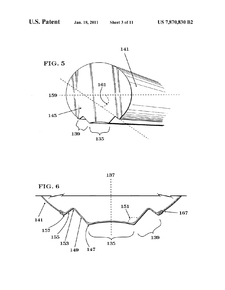
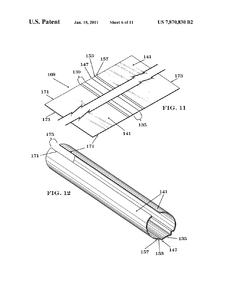
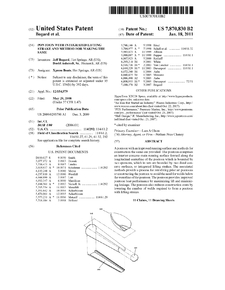
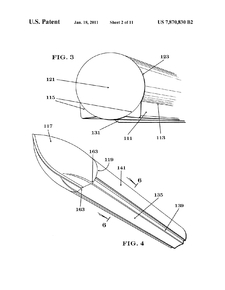
Congratulations to Xpress Boats, who recently received a patent for a pontoon they designed for their Veranda line of pontoon boats. Here are some pages of the patent I obtained for them, which convey some of the ideas underlying what they’ve invented:


The purpose of these new pontoons is to lift the boat out of the water faster and permits the boat to stay on plane easier. These pontoons greatly improve performance over typical round pontoons.

See http://www.verandamarine.com for more information on Veranda’s luxury line of pontoon boats.

Hot Coffee the Movie

This year's Sundance Film Festival saw the world premiere of the movie Hot Coffee, a documentary about the McDonald's hot coffee case. The documentary details how large corporations used the case as the centerpiece of a massive, organized public relations campaign to erode access to the civil justice system for ordinary citizens. Here's the artist's interview:

The director says this about her movie:

Despite the fact that federal legislation has never been successful, big business interests have won in the hearts and minds of average people. They launched a public relations campaign starting in the mid-80’s and continuing over the last two decades to convince the public that we have out of control juries, too many frivolous lawsuits and a civil justice system that needs reforming.  They have used anecdotes, half-truths and sometimes out and out lies in their efforts, for one purpose – to put limits on people’s access to the court system, the one and only place where an average citizen can go toe to toe with those with money and power and still have a shot at justice.

Thanks to Jason for the heads up on this movie.

Conservative former Senator opposes tort reform

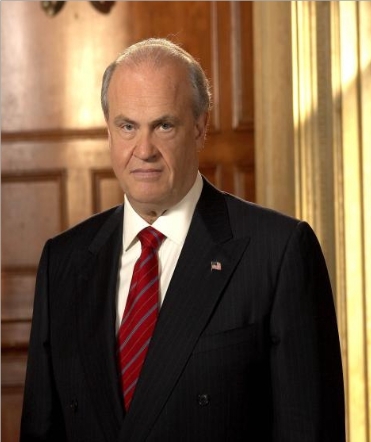
Fred Thompson, former U.S. Senator from Tennessee, opposes changes to the civil justice system in Tennessee sought by tort reform advocates. His reasoning?

As someone who practiced in the courts of Tennessee for almost 30 years, I believe that a Tennessee jury of average citizens, after hearing all the facts, under the guidance of an impartial judge and limited by the constraints of our appellate courts, is more likely to render justice in a particular case than would one-size-fits-all rules imposed by government, either state or federal.

The civil justice system has checks and balances designed to ensure that each party entering the system receives fair treatment. Each side gets a lawyer to passionately advocate for its position. A judge mediates the case so that the parties have access to evidence they need to present their case. The judge also decides whether a party's claim has enough merit to try before a jury.

After months or years of legal process, the claims of a lawsuit are narrowed down enough to try to a jury. A jury views evidence that is carefully vetted for authenticity, reliability, and relevance. The jury passes judgment on the credibility of evidence and testimony of the witnesses. Only then does the jury decide how wins and how much should be awarded.

The beauty of our civil justice system is that it permits a jury of our peers to decide disputes between citizens based upon the individual facts of each case. Tort reform seeks to change that fundamental right, and even conservatives like Fred Thompson recognize that tort reform is a bad idea for justice.

Insurers defaming Arkansas doctors to curtail small claims

Yesterday, the Arkansas Supreme Court affirmed a $21,000,000 verdict against Allstate Insurance Company for defaming a Pine Bluff radiologist. Allstate repeatedly told injury victims, lawyers, and other doctors that this radiologist’s practice was illegal and fraudulent because Allstate wanted to minimize payouts for smaller claims. The radiologist lost at least $8,000,000 in income over more than a decade due to this defamation by Allstate and other insurance companies, and for this reason a jury awarded significant punitive damages. Rather than taking its lumps, Allstate appealed, and the Arkansas Supreme Court found:

[T]his course of conduct was taken by a nationally recognized insurance agency and, apparently in accordance with their national claims practices and procedures to curb small, soft-tissue claims.

This ruling explicitly acknowledges that Allstate has a specific set of practices designed to minimize claim payouts on smaller claims at the expense of the injury victim. As discussed before on this blog, when insurance companies fail to pay fair value for claims, oftentimes the injury victim winds up receiving government healthcare to treat injuries. Why should the taxpayers foot the ultimate bill for negligent acts when the very purpose of insurance is to pay to make injury victims whole?

What are the implications of this ruling? In Arkansas, it is the first acknowledgment by our high court that insurance companies have adopted the delay, deny, defend business model of defending claims. This ruling follows an increasing public awareness of the problem of insurers becoming more concerned with shareholder profits than protecting policyholders and injury victims. As one example, CNN did three reports identifying Allstate as a prime offender (youtube of part 1, part 2, part 3). Long term, we should all hope that this opinion is the first step towards making insurance companies serve the people, and not the other way around.
Patents vs. trademarks

A friend of mine asked me a great question today: what’s the different between patents and trademarks?

Patents and trademarks are similar in that both are considered to be intellectual property (along with copyrights and trade secrets). Intellectual property, generally speaking, is a right the government grants to you in exchange for registration of an intangible property right. Intellectual property rights permit you to exclude others from using your intellectual property without your consent. Intellectual property is considered personal property, like a car, that can be sold or transferred through an estate.

There are distinct differences between the two. A patent deals with the invention of an apparatus or process. For a few examples from my practice, you could patent a new fishing yo-yo or a new boat pontoon, or you could patent a process for folding sheet metal or using computer software to manipulate data. A quick way to differentiate patents is to remember that they deal with manufacturing, either a product itself or a way to make the product. Patent rights arise ONLY from registration, and they expire 20 years after filing.

A trademark is a symbol that consumers use to identify the source of a product. So, consumers recognize the term COKE as a product made by a particular cola manufacturer. A quick way to differentiate trademarks is to remember that they deal with brands and marketing. Since trademark rights deal with consumer recognition, they necessarily arise ONLY from prior use, and they never expire as long as use continues. Registration just confers broader geographical rights as well as procedural and evidentiary benefits in legal proceedings.

Any given product can be covered by different types of intellectual property. For instance, a pontoon boat could have patented pontoons and a patented deck and still be protected by a  trademarked brand name.

Any business with valuable ideas, products, or brands should adopt a policy on how to secure and enforce intellectual property rights. Let us know if we can help.