CHANEY LAW FIRM BLOG

Subscribe to our Blog

Tips to avoid collisions with big rigs

95kenworth.jpg

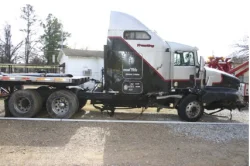
Some of the most violent collisions we see as injury attorneys involve big trucks, so this post will focus on what you can do to avoid having a wreck with a big truck.

Our first set of tips comes from Road Safe America. This organization was founded by the father of a W&L student who was killed by a speeding big rig on I-81 near Lexington, Virginia, while Hilary and I were in law school there. RSA has these tips:

  • Avoid blind spots around trucks. If you can't see a truck's side mirrors, the truck driver can't see you. One-third of all crashes between large trucks and cars take place in the blind spots around a truck.
  • Do not pass a truck on the right while the truck is turning right. Trucks must swing wide to the left to negotiate right turns safely, as the rear wheels follow a shorter path than the front wheels.
  • Do not cut in front of any large vehicle, including a truck or a bus. Since they require much more distance to stop in comparison to cars, forcing a large vehicle to stop quickly can result in a fatal accident.
  • Use the proper procedure to pass a large truck or bus on the highway. Accelerate slightly and maintain a consistent speed while passing. Wait until you can see the entire cab in your rear-view mirror before signaling and pulling in front of it.
  • Observe a truck's turn signals before trying to pass it. If the truck appears to be starting a left turn, check which way the driver is signaling before passing the truck on the right.
  • Give trucks at least four to six seconds of space in wet conditions and at highway speeds.
  • Call authorities if you see unsafe driving.
  • Do not cut off a truck in traffic or on the highway to reach your exit or turn.
  • Be extra alert as you approach a large truck. They behave very differently from cars.

 Tractor-trailers and dump trucks can legally weigh up to 80,000 pounds. While big trucks are necessary for our economy, they are also capable of causing great harm (you can read more about this on our Big Truck Collision page). We hope these tips help you avoid trouble with big trucks.

Hilary scheduled to teach Continuing Education across Arkansas

IMG_1110.JPG

I will speak about my experience as a Bipolar attorney for CLE credit at two locations in Arkansas.  On Friday, November 1 at 2:30pm I'll speak at the University of Arkansas School of Law in Fayetteville.  On Monday, November 18 I'll present at 12:00pm at the University of Arkansas at Little Rock's Bowen School of Law.  My talk is approved for 1 hour of Ethics CLE and it is free.  The talk is titled "Through the Open Door: A Bipolar Attorney Talks Mania, Recovery, and Heaven on Earth."  I'll have copies of my book of the same name for sale at the CLE for $12.00 (also available for purchase at Amazon).  The target audience is law students, professors, and attorneys, but both talks are open to the public.  

By speaking about my own struggles and eventual triumph over Bipolar Disorder, I hope to shine a light on mental illness and help remove the stigma associated with it.  Mental illness is not a death sentence, and with the proper treatment and support, anyone can beat mental illness and become a professional, spouse, parent, advocate, and friend.

I volunteer for Arkansas Judges and Lawyers Assistance Program which provides free treatment for lawyers, judges, and family members suffering from mental illness, addiction, and a variety of other illnesses.  I have found that advocating for mental health awareness and offering counsel to those suffering is a tonic, and as close to a cure as you can get.  

My personal insight into mental illness has proved a powerful tool in securing Social Security Disability benefits for my clients.  Few attorneys can relate to a client's manic or depressive episodes.  However, I can offer the compassion and understanding that clients seek and deserve.  

If you would like for me to speak to a group about my story, please contact me at the Chaney Law Firm.


Hilary presents to statewide mental health group

nami.jpg

Hilary was the keynote speaker at the annual conference of the Arkansas chapter of NAMI, the National Alliance on Mental Illness. The meeting took place at the Starving Artist Cafe in North Little Rock this past Friday and featured a loaded silent auction, a terrific dinner, and many bright and energetic volunteers. 

To coincide with its annual conference, NAMI Arkansas sponsored a continuing education class for mental health professionals at St. Vincent's Education Center in Little Rock on Saturday morning. Hilary again served as a speaker on how mental health issues affect business professionals.

If you're interested in learning more about how Hilary is educating others using her personal story, feel free to check out her book on Amazon.

We are more alike than different

It has been a strange two weeks. I went to the first Razorback game and stayed with the best man at my wedding. We had a great time at the game (other than it being a scorcher). I took my 5-year-old to our first game together and I was a proud papa at how interested he was in the game. 

The next day, a rubber oil hose busted on my wife's car. It had been not recalled, but whatever is right below a recall that gets you a free replacement. We always get her car's oil changed at the dealer (I do my own), but no one ever told us about the technical service bulletin. We wound up staying an extra night with my friends, whose toddler was sick; they cheerfully accepted the turn of fate. 

Do things happen for a reason? When I picked up the car, I dropped by my friend's house to pick up a Hog foam finger and Hog nose my son had left there. As it turns out, my friend got curious about his own car, found three recalls (including for airbags), and made an appointment to get them fixed. 

My younger son started school Tuesday of that week, and Hilary is now taking a more active role at the firm. She's been a real help to the whole firm, although getting used to the change in schedules has been an adjustment that has required some serious effort at getting straight. 

A friend of ours from law school had a pretty dark depressive episode earlier this week. Hilary was able to use her mental toolset to intervene and help out from across the country. 

Meanwhile, in the world, we have the potential for conflict in Syria, a third war in a decade halfway across the world. Facebook tells me my friends have wildly different and polarized views on this as well as other political issues.

However, the point isn't that we're having a weird month — that's just backdrop. As I was driving to work from my son's school today, a thought popped into my head: as Americans, we're all more alike than different. Growing up in Arkadelphia, I went to public schools along with just about everyone else regardless of race or creed. I went to law school with a Muslim Egyptian from California, a Jewish guy from Philadelphia, several folks from overseas, and just about everything in between. And we all got along for the most part. There were times of trouble, like the deaths of classmates, stress of getting good grades and good jobs for the summers and after graduation. We came together in times of adversity.

Example: When I was 17 and a senior in high school, a tornado hit Arkadelphia. I vividly remember a few days later when this kid, who had been picking on my little brother and I had confronted a few months earlier, showed up at my house to help clean up. I don't know if that guy ever learned how much I appreciated him, how truly brave it was of him, to show up despite our differences.

Another example: I found out recently that a college scholarship I received after the tornado was in honor of a friend's 8th-grade sister she lost to the winds at 22, along with her mother and stepfather. Although we were both from Arkadelphia, I didn't meet this friend until I moved back in 2009 and never made the connection until now. Here this girl was, losing her immediate family, yet still making an effort to help others. I was really overcome when I found out last weekend — it brought back of flood of memories about all the people in my life who took the time to care and keep me on the right path when it would have been easier for them to let me veer off.

As ordinary Americans, we know how to come together. Our morals come from creeds more ancient than written history has recorded. For the most part, the beliefs of everyday Americans are focused on family, health, and prosperity, usually in that order. In my view, different religions offer slightly different lenses through which to view those morals — it is like changing a spice in a recipe, rather than a major ingredient. Democrats, Republicans, hippies, suits, Christians, Muslims, Jews, Hindi, atheists — every American I know wants the best for their families and their friends. The tie that binds us is that we're American and we believe in the power of humanity to do the right thing (even if our politicians want to try everything else first). 

So, thank you for helping. Thank you for coming together with your neighbors and perfect strangers to offer your presence, gifts, and guidance. Your help may be the most important thing a person ever receives.